

The Disclosure Problem
The Danger of Rushing from Anomaly to Certainty


Something is changing.
Not just in the UFO conversation, but in the wider architecture of reality itself – or at least in our collective willingness to question the assumptions that have underpinned it for the past century.
Ten years ago, serious discussion of UFOs or non-human intelligence existed largely at the fringes. Today, former intelligence officials testify before Congress. Military pilots describe encounters on primetime television. News outlets discuss claims of ‘non-human biologics’ without irony. NASA holds public briefings on UAP. Silicon Valley technologists openly debate consciousness and the possibility that reality itself may behave more like an informational system than a fixed material substrate[1].
At the same time, artificial intelligence is beginning to destabilise one of humanity’s oldest certainties: that human cognition occupies a uniquely privileged position in the order of things.
With all of this happening simultaneously, we need to pay attention very carefully to what it is telling us.
Because when civilisations encounter periods of rapid ontological instability – moments when their deepest assumptions about reality begin to fracture – the danger is not merely confusion, but overcorrection – the human tendency to rush from anomaly to absolute explanation.
This, historically, is where things become dangerous.
We are now entering what many are beginning to call the ‘Age of Disclosure’. But the phrase itself may already contain a hidden assumption: that what is being disclosed is singular, stable, and ultimately understandable within our existing conceptual frameworks.
That may not be true at all.
The modern UAP archive is not simply a collection of unidentified flying objects. It is a sprawling, contradictory, psychologically charged body of material that appears to intersect with consciousness, perception, symbolism, trauma, physics, information theory, folklore, religion, and human expectation itself.
The phenomenon – whatever it ultimately turns out to be – does not behave cleanly.
And that should give us pause.
Because the temptation, particularly in periods of uncertainty, is to impose coherence too quickly. To move from:
‘something strange is happening’
to:‘therefore I now know what’s causing it.’
History is littered with examples of intelligent people making exactly this mistake.
The problem is not that they observed anomalies. Often, the anomalies were real, or at least sincerely experienced.
The problem is that observation became ontology – the question of what kind of thing something actually is – and ontology became metaphysics, with extraordinary speed.
In other words: certainty arrived before understanding.
This is why the coming months and years will require a level of disciplined thinking largely absent from both traditional ufology and much of modern internet culture.
Because the challenge ahead is no longer simply whether anomalous phenomena exist - the United States government has already publicly acknowledged that they do[2].
The challenge is whether we can look directly at anomaly without collapsing prematurely into belief.
That may turn out to be the real test of Disclosure.
The Historical Trap
One of the great difficulties in studying anomalous phenomena is that the phenomena themselves often arrive wrapped in emotional force.
People do not simply see strange lights.
They experience revelation.
Transformation.
Fear.
Meaning.
Sometimes even healing.
This is important, because emotionally charged experiences have a powerful tendency to generate total explanations. The mind does not like ambiguity for very long. Particularly when the experience feels personal, destabilising, or sacred.
And this is where many intelligent investigators – including some of the most compelling figures in the history of the field – began to drift beyond observation into metaphysics.
Wilhelm Reich is a good example.
Reich (below) was, in many ways, decades ahead of his time. A brilliant and deeply controversial psychoanalyst who broke from Freud in the 1920s and fled Nazi Germany in 1933, he became convinced that he had discovered a universal life energy permeating both biology and the atmosphere itself – what he called ‘orgone’.
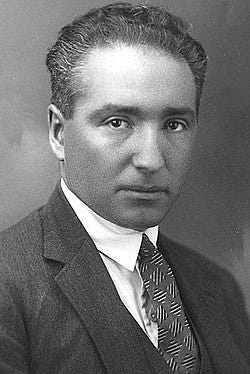
Some of his observations remain genuinely intriguing even now. He documented strange microscopic pulsating structures in blood and organic tissue, unusual blue glowing phenomena in the atmosphere, and possible energetic links between emotion, illness, and environment.
The problem was not necessarily that Reich observed unusual things.
The problem was that he moved too quickly from:
anomaly,
to:explanation,
to:cosmology.
Eventually, everything became evidence for the theory itself.
Biology.
Weather.
Psychology.
Politics.
Spirituality.
Human illness.
Civilisational collapse.
The framework expanded until it explained almost everything – which is often the moment a theory becomes least reliable.
And Reich was not alone.
In the 1960s and 1970s, the American journalist and researcher John Keel, one of the most perceptive chroniclers of high strangeness, began by investigating UFO reports as physical anomalies. But over time he came to suspect that the phenomenon behaved less like extraterrestrial visitation and more like an adaptive, deceptive intelligence capable of manipulating belief itself. His work became increasingly metaphysical, populated by ultra-terrestrials (non-human intelligences rooted in Earth rather than outer space), trickster forces, and reality-distorting entities that seemed to shape-shift through history.
And yet Keel (below) remains valuable precisely because he recognised something many investigators still resist: the phenomenon does not behave cleanly.
It mutates.
It mirrors expectation.
It absorbs symbolism.
It destabilises certainty.
Even today, many of the sharpest observers in the field eventually find themselves confronting the same problem: the data refuses to stay confined inside ordinary categories.
And here’s the point. More recently, parts of the Disclosure movement itself have begun showing similar tendencies. What starts as legitimate inquiry into military encounters, radar data, pilot testimony, or government secrecy can quickly harden into complete cosmological systems:
humanity as a genetic experiment,
ascension narratives,
interdimensional hierarchies (from angels to demons),
spiritually enlightened aliens,
or apocalyptic prophetic frameworks.
Again, the issue is not necessarily that every anomalous experience is false.
The issue is the speed with which uncertainty becomes certainty.
This matters because anomalous phenomena appear uniquely capable of bypassing our normal intellectual caution. They trigger what might be called ‘ontological vertigo’: the destabilising sensation that reality itself may not be what we thought it was.
And when humans experience ontological vertigo, they tend to reach for total meaning systems with extraordinary speed.
This is why Jacques Vallée remains such an important figure in the history of the subject.
Not because he solved the mystery.
But because he refused to solve it too quickly.
For more than half a century, Vallée (below) has insisted on something deeply unfashionable in modern culture: that ambiguity itself may be part of the phenomenon. That premature certainty may actually obscure understanding rather than advance it.
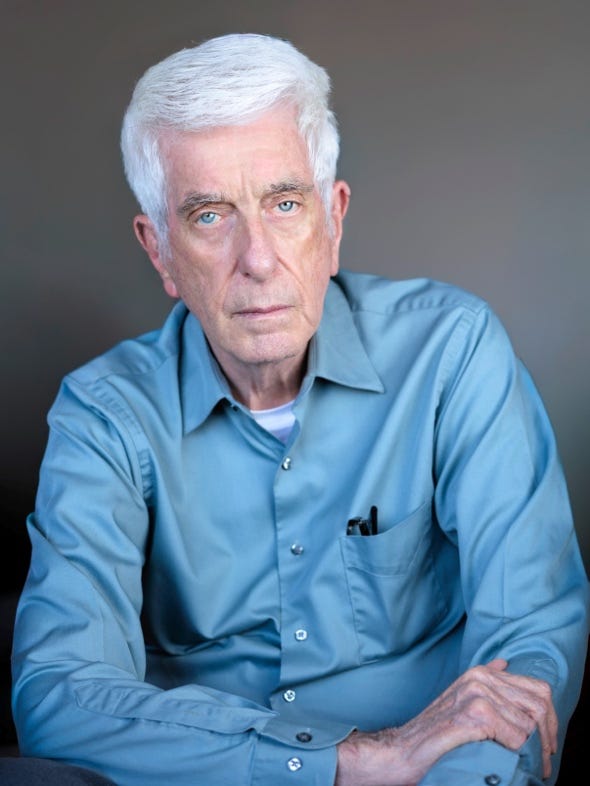
His enduring value lies not in having closed the case, but in resisting the urge to collapse anomaly into ideology.
That distinction may become critically important in the months and years ahead.
A Discipline for the Age of Disclosure
So how do we move forward without falling into either cynicism or belief?
How do we study genuinely anomalous phenomena without either dismissing them outright or constructing entire cosmologies around them?
Increasingly, I think the answer may lie in a simple progression:
anomaly first,
ontology second,
metaphysics last.
Not because metaphysics is unimportant. Quite the opposite. Questions about consciousness, intelligence, reality, meaning, and the nature of existence may ultimately become unavoidable as this conversation evolves.
But the order matters.
And history suggests we repeatedly get the order wrong.
The first task is anomaly.
Observation.
Pattern recognition.
Data.
Testimony.
Correlation.
Behaviour.
What actually happens?
Not what we wish is happening.
Not what confirms our preferred worldview.
Not what fits our politics, spirituality, or fears.
Just the anomaly itself.
This sounds straightforward, but it is remarkably difficult once emotion enters the system. Particularly because many anomalous experiences feel profoundly meaningful to the people who undergo them.
A luminous orb appearing during a moment of psychological crisis.
A near-death experience that transforms someone’s understanding of consciousness.
A military encounter involving impossible flight characteristics.
A synchronistic event that arrives with uncanny timing.
These experiences often carry an emotional and symbolic charge far beyond ordinary perception. Which means the temptation is always to leap immediately into interpretation.
But interpretation is not the same thing as understanding – and this is where ontology enters the picture.
Ontology is simply the question:
What kind of thing might this phenomenon actually be?
Not in an absolute sense.
Not as doctrine.
But as provisional modelling.
Which is where frameworks become useful.
Perhaps some phenomena involve plasma-like behaviours.
Perhaps consciousness interacts with reality in ways we do not yet understand.
Perhaps perception itself functions more like an interface than a direct apprehension of objective reality.
Perhaps certain anomalous events emerge under conditions of environmental, psychological, or informational stress.
These are ontological propositions. Importantly, they are not yet metaphysical claims. They are not fixed in stone and do not require us to conclude:
that the universe is spiritually guided,
that aliens are visiting Earth,
that reality is a simulation,
or that ancient religious systems secretly understood everything all along.
This distinction matters enormously.
Because once metaphysics arrives too early, the investigative process often collapses into narrative reinforcement. Every new anomaly becomes proof of the pre-existing belief structure. Contradictions are absorbed rather than examined. Ambiguity disappears.
Inquiry quietly becomes ideology.
And this, increasingly, is the danger facing modern Disclosure culture – particularly online.
Because digital environments reward certainty, not uncertainty. They reward emotionally satisfying narratives, not disciplined ambiguity. The algorithm prefers revelation over restraint.
But reality – especially anomalous reality – may not cooperate with our need for closure.
In fact, one of the most consistent features of the UFO/UAP archive is precisely its resistance to stable interpretation. The phenomenon appears physical in some cases and dreamlike in others. It behaves technologically one moment, symbolically the next. It leaves traces yet also distorts perception. It appears objective, then deeply subjective.
This is not normal behaviour for a conventional object.
Which means we may need a framework capable of holding contradiction without prematurely resolving it.
That is why maintaining layered uncertainty matters.
Anomaly first.
Ontology second.
Metaphysics last.
The progression is not merely philosophical caution. It is a form of intellectual hygiene.
Particularly now.
Because if the Age of Disclosure is real – and I increasingly suspect it is – then humanity may be entering a period of profound ontological stress. A period in which old models of reality begin destabilising faster than new ones can responsibly replace them.
And under those conditions, clarity may become one of the most important disciplines we possess.
Why This Matters Now
All of this might once have remained a niche philosophical problem – the kind of thing debated quietly at the edges of physics, consciousness research, or ufology.
But not anymore.
Because the wider environment surrounding the UAP conversation is changing with extraordinary speed.
Artificial intelligence is accelerating.
Institutional trust is fragmenting.
Information systems are becoming increasingly unstable.
Synthetic media is blurring the distinction between authentic and artificial experience.
Geopolitical tensions are rising.
And simultaneously, discussion of anomalous phenomena is moving from the cultural fringe into the centre of public discourse.
These developments are not isolated from one another.
They are interacting.
And that interaction may prove historically consequential.
For most of modern history, reality itself functioned as a relatively stable social consensus. Whatever people privately believed, institutions broadly maintained a coherent model of the world:
material reality was objective,
consciousness was local[3],
human perception was broadly reliable,
and anomalous experiences existed at the margins.
Today, nearly every one of those assumptions is under pressure.
AI is challenging the uniqueness of human cognition.
Quantum information theory is reshaping parts of physics.
Neuroscience increasingly suggests perception is actively constructed rather than simply passively received.
Simulation theory has migrated from philosophy seminars into mainstream technological culture.
And the UAP discussion has opened the door – however cautiously – to the possibility that reality may contain intelligences, behaviours, or dynamics that do not fit conventional models.
This creates an unusual danger.
Not simply misinformation.
Ontological overload.
Because humans are meaning-making creatures. When multiple foundational assumptions destabilise simultaneously, the impulse is to force them into a single explanatory narrative.
And that is precisely the moment disciplined thinking becomes most important.
Already, parts of the modern Disclosure landscape are beginning to exhibit the characteristics of what might be called metaphysical contagion:
escalating certainty,
total explanatory systems,
spiritual absolutism,
apocalyptic thinking,
and emotionally charged narratives that absorb every new anomaly into a pre-existing worldview.
In previous eras, such belief systems spread slowly.
Now they spread at algorithmic speed.
The architecture of the internet rewards emotional coherence over evidential coherence. A complete narrative – however speculative – will almost always travel further than ambiguity or restraint.
But anomalous phenomena may demand exactly the opposite posture.
Because the deeper problem emerging beneath the UAP conversation is not simply:
Are we alone?
It is:
What kind of reality produces phenomena that appear simultaneously physical, psychological, symbolic, and informational?
That is a far more destabilising question.
And one reason it matters now is because the pressure conditions themselves appear to be intensifying. The modern world increasingly resembles what complexity theorists describe as a system approaching criticality:
rising instability,
rising correlation,
rising informational noise,
rising emotional volatility,
and increasingly nonlinear outcomes.
In such environments, small inputs can produce disproportionately large effects – as I outlined in The Outlier Series.
These include ideological ones.
Which means the informational immune system matters now more than ever.
Not scepticism in the reductive sense.
Not automatic belief.
But disciplined ambiguity.
The capacity to remain inside uncertainty long enough for better models to emerge.
Because if Disclosure is real in any meaningful sense, then the challenge ahead may not simply involve revealing hidden information.
It may involve learning how to think coherently while reality itself becomes less conceptually stable.
The Framework Problem
At this point, a reasonable question emerges:
If we are warning against premature ontology and metaphysical overreach, does that mean we should avoid frameworks altogether?
Not at all - in fact, the opposite may be true.
Because raw anomaly, on its own, eventually becomes overwhelming. A civilisation cannot absorb decades of contradictory UAP reports, consciousness anomalies, near-death experiences, psi data, plasma phenomena, symbolic encounters, military testimony, and perceptual instability without eventually attempting some kind of higher-order synthesis.
The problem isn’t frameworks – it’s rigidity.
A useful framework should behave less like a belief system and more like a scaffolding – provisional, adaptive, and capable of revision as new data arrives.
This, too, is partly where The Outlier Series eventually arrived.
Not at certainty.
Not at revelation.
But at the possibility that many anomalous phenomena may make more sense if approached as ‘interface behaviours’ rather than object intrusions.
That distinction is important, because for most of the modern UFO era, the dominant assumption has been technological visitation:
physical craft,
external intelligences,
structured vehicles entering our airspace from somewhere else.
And some portion of the data may indeed point in that direction.
But the deeper archive – particularly the high-strangeness material examined by researchers like Jacques Vallée – often behaves differently. The phenomenon appears:
adaptive,
symbolic,
psychologically coupled,
context sensitive,
and strangely resistant to stable categorisation.
It behaves less like hardware alone and more like interaction.
This is where AIM – the Adaptive Interface Model at the culmination of The Outlier Series – begins to emerge, not as a cosmology, but as a working hypothesis.
Importantly, AIM is not an answer to the phenomenon.
It is an attempt to create a disciplined language for discussing recurring behavioural patterns inside the anomaly without prematurely collapsing into metaphysics.
At its most basic level, AIM proposes something surprisingly modest:
Reality may behave less like a fixed mechanical stage and more like an adaptive informational interface in which consciousness participates.
Under conditions of stress, instability, liminality, or threshold states, aspects of that interface may become unusually permeable, allowing anomalous phenomena such as UAP to manifest in ways that appear physical, symbolic, psychological, or informational simultaneously.
That is a model.
Not a belief system.
AIM does not require:
extraterrestrials,
spiritual hierarchies,
simulation hypotheses,
an overarching cosmology,
or universal consciousness.
Nor does it deny them.
It simply brackets those questions for later.
That is the crucial point.
Because AIM is not trying to tell us what ultimate reality is. It is trying to provide a framework flexible enough to hold the anomaly without reducing it prematurely to either:
materialist dismissal,
or:metaphysical certainty.
In this sense, AIM attempts to occupy a difficult middle territory rarely tolerated in modern discourse.
Not:
‘nothing is happening’.
And not:
‘everything is explained’.
But rather:
something appears to be happening,
the existing categories may be insufficient,
and new models may be required –
provided we maintain enough careful thinking not to mythologise the data before understanding it.
That restraint is critical because the history of anomalous research repeatedly shows what happens when frameworks harden into doctrine.
The moment a model becomes emotionally non-negotiable, inquiry begins narrowing rather than expanding. The map becomes sacred. And once that happens, the phenomenon itself often disappears beneath the belief system constructed around it.
Which is why AIM, if it has value at all, should remain provisional.
Adaptive.
Open.
Because the goal is not to replace one orthodoxy with another.
The goal is to preserve inquiry under conditions of ontological stress.
Participation
None of this, however, should be mistaken for dismissal.
Particularly of the experiencer.
Because one of the enduring failures of both mainstream scepticism and parts of traditional ufology is that they often flatten the human dimension of the encounter itself.
Either:
the experiencer is treated as delusional,
or:the experience is immediately absorbed into a fixed cosmology.
Both responses miss something important.
Because whatever these phenomena ultimately are – psychological, physical, informational, symbolic, environmental, or something that cuts across those categories entirely – the felt experience of the encounter is often profoundly real.
Sometimes transformative.
Sometimes destabilising.
Sometimes healing.
Again and again, people emerge from anomalous experiences with the same underlying conviction:
that reality is somehow larger, stranger, and more interconnected than they previously believed.
Which means it deserves to be approached neither with ridicule nor automatic belief, but with seriousness and care.
This may ultimately prove to be one of the most important implications of the entire UAP conversation: not merely that strange things appear in the sky, but that the phenomenon seems repeatedly to draw human consciousness itself into the event.
This is also one of the reasons behind initiatives like the EXO Institute: not to promote a fixed belief system about the phenomenon, but to create a space where anomaly, consciousness, science, and human experience can be explored without prematurely collapsing into ideology.
The observer is not always standing outside the anomaly.
Often, the observer appears entangled with it.
This is partly why the most enduring encounters are rarely experienced as simple sightings. They are experienced as participatory events.
And perhaps this is where the conversation now begins to move beyond Disclosure itself.
Because after the anomaly comes a deeper question:
What is the relationship between consciousness and reality in a world where the boundary between observer and observed may be less stable than we assumed?
This is the territory the next phase of inquiry - the series I’ll announce shortly to follow The Outlier Series – will explore.
Not belief.
Not doctrine.
Not a new religion disguised as ontology.
But participation.
Careful participation.
Conscious participation.
Disciplined, grounded participation.
If The Outlier Series explored the possibility that what we experience as reality may itself function as an adaptive interface – a perceptual medium through which deeper layers of the world present themselves to consciousness – then the next question naturally follows:
What role do we play within it?
Not as passive spectators.
Not necessarily as creators.
But perhaps as participants within a system whose deeper architecture we are only beginning to perceive.
That possibility demands humility.
Because the temptation, as always, will be certainty.
But perhaps the healthiest posture – especially now – is something more balanced:
to remain grounded without becoming closed;
open without becoming credulous;
and capable of holding profound anomaly without surrendering the clarity required to investigate it properly.
That may ultimately be the real challenge of the Age of Disclosure.
Not simply learning that reality is stranger than we imagined.
But learning how to participate in that strangeness without losing ourselves inside it.
[1] aka simulation theory: the idea that reality may behave more like a computational or informational system than we normally assume.
[2] This shift began after the 2021 ODNI Preliminary Assessment confirmed that many military UAP incidents remained genuinely unexplained and was followed by the creation of the Pentagon’s All-domain Anomaly Resolution Office (AARO) in 2022, NASA’s independent UAP study in 2023, and more recent public releases of archived UAP-related government files (in May 2026) under Trump administration transparency initiatives.
[3] The traditional assumption that awareness is confined to the brain and separate from the outside world.
“Anomaly first. Ontology second. Metaphysics last.”
Perhaps this is a spiral - ongoing journeys through a range of anomalous phenomena that involve expanding cycles of disclosure/discovery in relationship with SELF disclosure/discovery. The rubric for SELF might be
Breathe first. Heart second. Head last. 🙂
I think that, if we want full disclosure, we also really have to assume a serious, comprehensive study and analysis of the UAP NHI situation, along with a no-holds-barred questioning of who we are and can be. As disclosure and the confirmation of a complex tapestry of dynamic interactive NHI presences proceeds, at first, human societies and political systems may be slow to grasp the full significance and implications of the situation - especially if there are no immediate financial, personal, or day-to-day consequences.
As the reality of confirmed NHI presence gradually sinks in, public discourse will likely default to familiar political and strategic questions: What do they want? Do we need to defend ourselves? Many people will project human Realpolitik assumptions, materialist thinking, and Darwinian expectations onto the NHI phenomenon.
According to some studies, moderate religious institutions may adapt more easily, while more rigid or fundamentalist groups could respond in simpler and more condemnatory ways. Yet, judging by the (up to now May 26, 2026) for the most part, apparently indifferent public reaction to disclosure-related news so far, everyday human life may initially continue much as before.
But along with the almost sufficiently confirmed presence of NHI associated to UAP, other important issues that require radical change and global coordination are accumulating. At the same time, humanity is already being challenged by the growing need to adapt its social intelligence, coherence, and systems of meaning-making—not only to increasingly agentic Artificial Intelligence, but also to Nature’s more visible and reactive forms of intelligence, and now perhaps to the presence of advanced NHI intelligence as well.
Over the medium to long term, however, the deeper challenge may be whether human nature itself can adapt to:
Losing the assumption that humanity is the most intelligent and powerful form of life on Earth; and developing new, globally shared values, worldviews, and perhaps even meta-theoretical frameworks capable of helping us understand in an obvious, intuitive way and participate within a plurality of multi-ontological beings and realities—beings that appear to have learned how to circumvent or transcend conventional spacetime limitations.
It is also possible that humanity has always possessed latent psychic or non-local capacities, now increasingly interpreted in relation to multi-ontological or trans-ontological phenomena, including contactee and experiencer accounts. Nevertheless, much of human social consciousness, identity, and value formation has long been shaped by the need to survive under harsh material conditions. Thus, short-term thinking and and preferene for simple solutions. In fact, for millennia—from pre-Paleolithic through post-Paleolithic times—our species adapted through local, short-term, and often dualistic responses to reality.
This raises a profound question: Can humanity evolve into a more coherent, responsible, and empowered multi-ontological species—one capable of deserving sovereignty while participating, more as equals, within a larger spacetime-transcending or spacetime-manipulating community?
Or, if our short-term tribal instincts prove too deeply entrenched, will humanity instead require external control, re-engineering, or guidance? Might authoritarian systems emerge, perhaps involving alliances between human power structures and certain NHI groups? Or could humanity discover within itself unconventional capacities and transformative resources - possibly linked to a broader cosmic shift - as suggested by some contact experiencers, channelers, and inspired voices associated with the New Age movement, however unrealistic such possibilities may sound to more conventionally “realist” disclosure perspectives?
The need to adapt and survive requires an unheard-of truthful, comprehensive, and truly integral conversation now.