

The Soul Is Light
Disclosure Without Disclosure

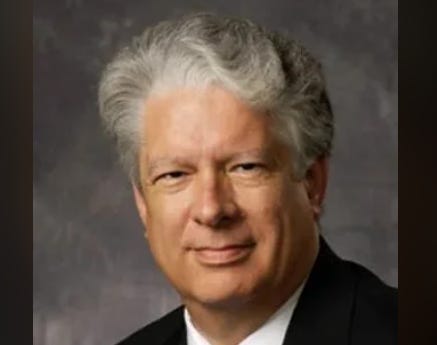
One of the stranger patterns I’ve noticed over the years is what happens to people from the aerospace-defence-intelligence world after they brush up against what’s loosely called the phenomenon.
By that, I don’t just mean sightings of unidentified craft or lights in the sky. I mean the wider UAP complex: encounters with luminous anomalies; proximity effects on technology and the human body; and, perhaps most consequentially, the psychological and existential aftershocks that follow. Time distortion. Perceptual shifts. A sense that the ground truth of reality has moved beneath your feet.
For some people, that encounter seems to act like a solvent. It dissolves long-held assumptions about matter, mind, and the nature of the universe. And when that happens to individuals who have spent their lives inside the most materialist, security-driven corners of modern society, the results can be striking.
In The Light Beyond the Mountains, I wrote about Claude Swanson as one such case. Swanson was not a marginal figure or a dilettante. He trained at MIT and Princeton, worked on superconducting plasma containment for fusion research, and consulted for organisations that included DARPA, the US Army, Navy, and the CIA. He moved comfortably in the same ‘frontier of the frontier’ circles as Hal Puthoff, Kit Green, Eric Davis, and others whose names recur in the UAP literature.
And yet, as Swanson’s career progressed, his public output shifted dramatically. Instead of talking about classified systems or advanced technologies, he began writing about torsion fields, consciousness, biophotons, and the possibility that the universe is underpinned by subtle informational structures. He spoke openly about near-death experiences, psi phenomena, and the survival of consciousness after death.
At the time, it struck me as an odd trajectory: a man with impeccable establishment credentials drifting, apparently, into territory that many of his former colleagues would dismiss as spiritual or even fringe. But the deeper I went into the subject, the more that pattern repeated itself.
Which brings me to Dr James Ryder.
Ryder (see photo), now deceased, was, by any reasonable measure, a heavyweight. A former Vice President of Lockheed Martin Space Systems Company and head of its Advanced Technology Center, he sat at the apex of two aerospace ecosystems – unclassified and classified - the white and the black.
In sworn testimony before Congress in September 2025, veteran investigative journalist George Knapp laid out the evidentiary backbone for why claims of crash retrievals and reverse-engineering programmes can no longer be dismissed as fringe speculation. Knapp was careful to stress that he is not a believer, nor a witness, but a reporter who has followed the paper trail for nearly four decades. What first hooked him, he said, were internal government documents obtained through FOIA, written long before public scrutiny was expected, in which military and intelligence officials privately acknowledged that unidentified craft were real, manoeuvred intelligently, and outperformed any known technology - even as the public was told the opposite. From that point on, Knapp argued, the issue ceased to be about belief and became a matter of record, deception, and accountability.
Knapp testified that crash-retrieval and reverse-engineering efforts are real, long-running, and multinational, involving the United States, Russia, and China. Central to his account was confirmation that the Las Vegas-based billionaire, Robert Bigelow, through his company BAASS, negotiated directly with a senior executive at Lockheed Martin – later identified by Knapp as James Ryder - to acquire unusual materials that Lockheed was safeguarding at a California facility - materials Knapp stated were not manufactured on Earth and appeared to have been produced in a zero-gravity environment. The deal, he said, was ultimately blocked following intervention by intelligence agencies.
Knapp also described a consistent pattern of intimidation: multiple sources he spoke to over the years were visited immediately afterward by government security personnel and warned to remain silent, in some cases through explicit personal threats.
Taken together, his testimony painted a picture not of rumour or confusion, but of a deeply compartmentalised system in which extraordinary information is tightly controlled - and in which even senior insiders are often left unable to speak directly about what they know.
But long before any of that surfaced publicly, I encountered Ryder in a very different context.
In 2015, I attended a talk he gave in London at the Lucis Trust. The title alone was enough to induce cognitive dissonance: The Soul is Light. What then is Light? This was delivered not at a defence conference or technical symposium – beats that were familiar to me as a former defence journalist - but at an Arcane School gathering - a setting explicitly concerned with consciousness, metaphysics, and inner development.
At the time, I had no idea of Ryder’s alleged involvement in any UAP-related technology transfer. I knew him simply as a retired Lockheed Martin executive who had chosen, in his post-corporate life, to speak about the nature of light, space, and consciousness.
The talk itself was wide-ranging and, in places, hard to follow. Ryder moved from ancient philosophy to modern physics, from plasma and electromagnetism to dark matter and cosmology. He spoke about the universe as deeply interconnected, about ‘empty’ space not being empty at all, and about consciousness as something woven into reality rather than accidentally produced by it.
I remember leaving the room intrigued but baffled. Much of what he said didn’t land for me at the time. It felt as though he was pointing toward something profound but doing so from a vantage point I couldn’t quite access.
I understand the broad beats of it better now.
Not because I’ve resolved the mysteries he was gesturing toward, but because they align closely with the questions that sit at the heart of The Outlier Series - my attempt to understand anomalous phenomena not as isolated curiosities, but as signals that our current models of reality are incomplete.
Ryder wasn’t talking about UFOs. He didn’t need to. He was outlining an ontology in which anomalies make sense: a universe that is field-based rather than object-based; information-rich rather than inert; participatory rather than strictly observer-independent. A universe in which plasma - the dominant state of visible matter - plays a far more central role than our everyday intuitions suggest.
Seen in that light, Ryder’s talk reads less like a spiritual sidestep and more like a translation effort: an attempt to communicate a worldview shift without referencing the specific triggers that produced it.
Which raises an unavoidable question.
If people like Swanson and Ryder were exposed - directly or indirectly - to technologies, materials, or information that did not originate in our known human world, what would that do to a mind trained in classical engineering and physics? How would it reorder your assumptions about causality, intelligence, and humanity’s place in the cosmos?
And if you were bound by lifelong non-disclosure agreements - if you could not speak about what you’d seen without severe personal consequences - how would you communicate the impact of that knowledge at all?
One answer, I suspect, is that you don’t talk about the technology. You talk about meaning. You talk about consciousness. You talk about light.
That way, the facts remain protected, but the truth - or at least the shock of it - can still be shared.
There’s one final detail that’s stayed with me.
After Ryder’s talk, I approached him and introduced myself as the former Aerospace Editor of Jane’s Defence Weekly. The reaction was immediate and unmistakable. For a split second, something like alarm crossed his face - a reflex, perhaps, from an earlier life. He accepted, politely but cautiously, the copy of The Hunt for Zero Point I offered him.
I never grilled him. I never intended to. I was genuinely intrigued by what he’d said and wanted, simply, to ask how his spiritual cosmology related to his years in advanced aerospace. But the moment passed. The question remained unasked.
Looking back now, I can’t help wondering what he might have said - had I not, inadvertently, reminded him of the world he had left behind.
I offer connection to Soul, soul being a visceral experience once unveiled. It reveals consciousness as a field of interconnected oneness. I have videos to prove that there is only one consciousness. The high intelligence of Soul is the advanced Source we need to connect to. PS I am not a PhD, MD nor a scientist, but a therapist who uses Soul to find dissociated memories be they in the womb, a body part, embedded as a disease state or in a past life.
Well worth the read, IMO. On the role "beauty" has to play...poet, for sure, though with a reference to "light" that lingers...
https://open.substack.com/pub/raheemcanvas/p/beauty-will-save-the-world?utm_source=share&utm_medium=android&r=167zo