

'You Can't Classify Reality'
Notes from Sol Italy

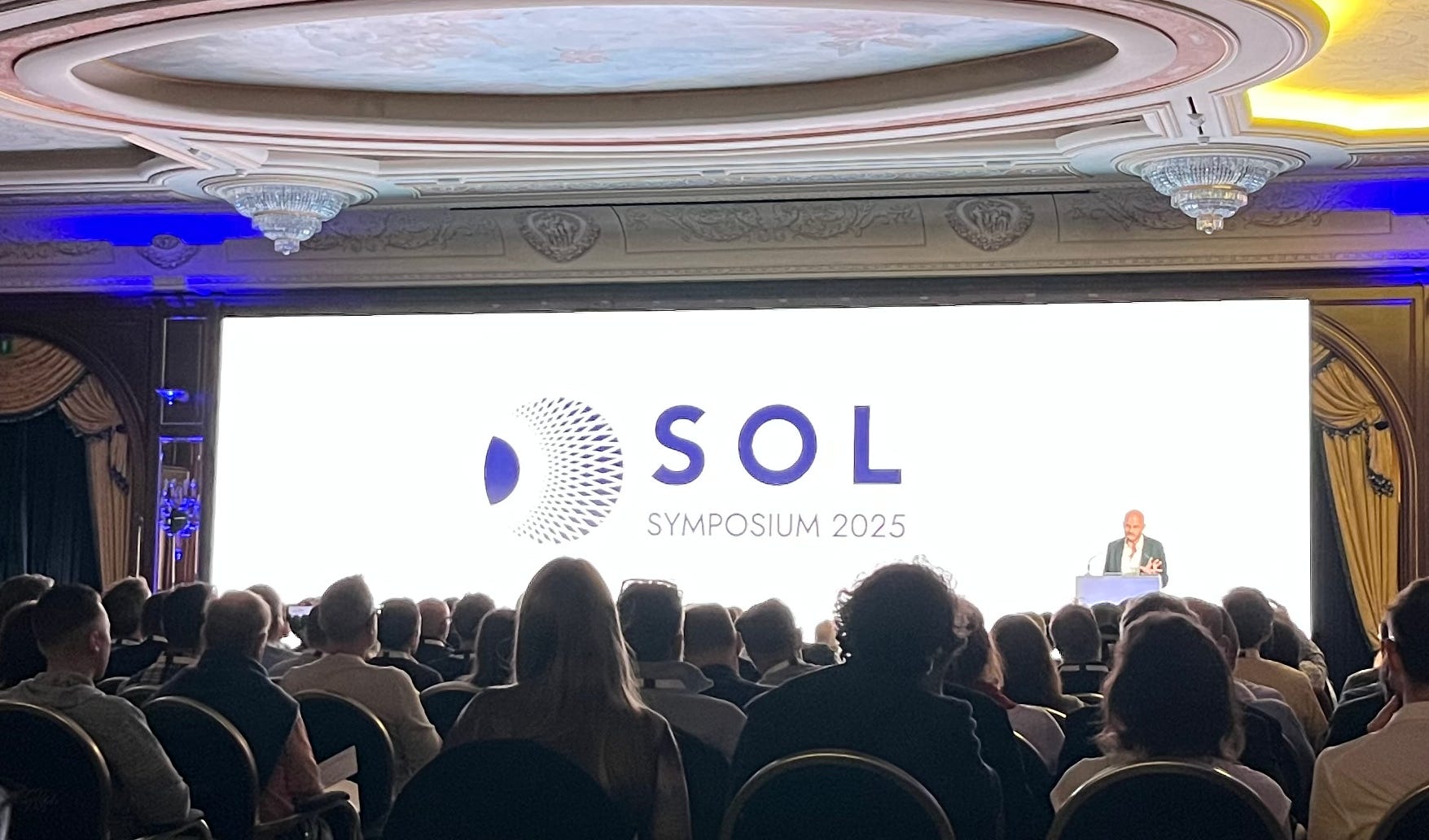
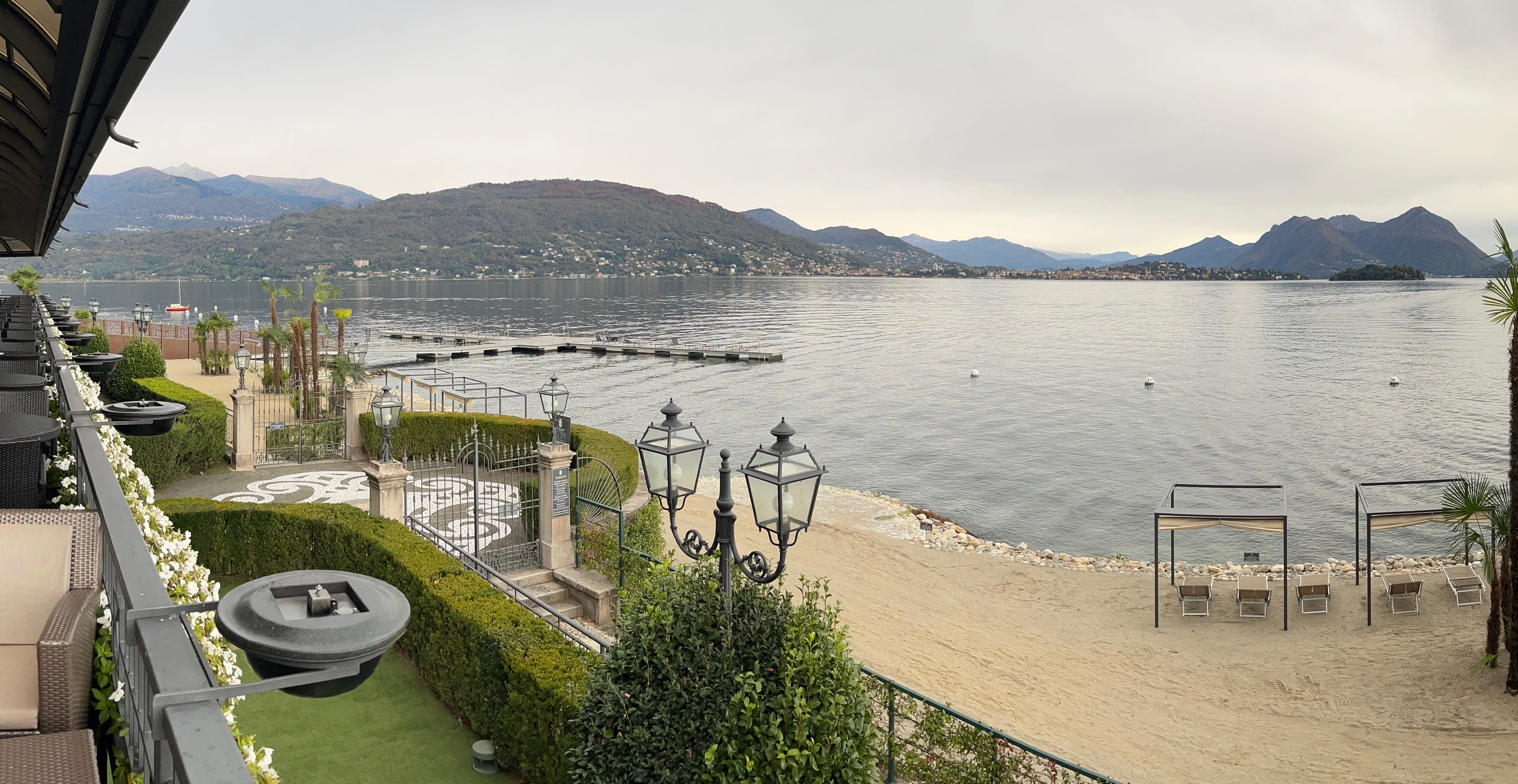
When some of the world’s most credentialed scientists, philosophers and technologists gather to talk UFOs, you know something has changed. At the end of October, that happened on the shores of Lake Maggiore, Italy, where the Sol Foundation - a California-based think tank co-founded by Stanford professor Garry Nolan and anthropologist Peter Skafish - held its third meeting, and its first in Europe.
Sol’s purpose is to pull the study of Unidentified Anomalous Phenomena out of the cultural shadows and into academic daylight - to treat the subject not as taboo, but as a legitimate frontier of science and philosophy.
At this year’s 24-27 October event there were no fireworks, no sensational unveilings, with the exception of a paper by Dr Beatriz Villarroel and presentations from current and former members of the Skywatcher team. Villarroel’s study detailed her team’s discovery of ‘transient luminous objects’ in Earth orbit that appear and then vanish - some, intriguingly, coinciding with historical nuclear tests. The Skywatcher contingent - led by Jake Barber and engineer James Fowler (who has since left the core group to set up on his own) - described their creation of a networked sensor system and what they term a ‘dog-whistle’ device, designed to attract or provoke UAP through controlled signalling.
No one on the shores of Lake Maggiore was arguing about whether the phenomenon exists anymore. That question is, thank God, old hat. The real work now is how to bring UAP into the light - responsibly, coherently, without waiting for governments to take the lead. That boat, for just about everyone I spoke to, simply isn’t going to sail.
As Garry Nolan told me: “Government disclosure has had its chance. It’s failed. It’s now up to us - the scientists, the technologists, the people who care about truth.”
That line hung in my head all weekend. Disclosure, in Nolan’s framing, isn’t an event - it’s a process, a culture shift. And, it’s clear, there has been a shift - within a sector that, arguably, has been as hard a nut to crack in its own way as governments and militaries. “My inbox is full of academics wanting to engage,” Nolan told the audience in his opening address. “That’s new. That’s the signal of change.”
Sol now is bolder and unabashed - Nolan sees it not as a fringe gathering but as a prototype for a global, citizen-driven research network - a place where physicists and philosophers can occupy the same room without irony.
“We don’t need validation anymore,” he said. “We need participation.”
The Data
Nolan is not your average conference chair for events like this. He’s a tenured professor of pathology at Stanford University, known internationally for pioneering work in single-cell analysis, immunology, and cancer research. His lab has spun off multiple biotech companies, and his publication record runs to hundreds of peer-reviewed papers.
In short, he’s a man with everything to lose by engaging the UAP subject - and that’s precisely why his involvement matters.
For the last decade, he has lent his analytic toolkit to some anomalies no one else would touch: biological traces from alleged UAP encounters, Havana Syndrome injuries, and the question of how high-energy fields emitted by UFOs interact with human tissue - not the stuff of sci-fi conventions, but mass spectrometry, isotopic ratios, histology. In a couple of words: hard data.
And yet, he admits that data alone can’t move culture. “Even I, as a scientist, never write a paper that doesn’t have a story,” he told me. “If you can’t tell a story about the data, the data just has no connection.”
That idea - the story in the data - became the quiet heartbeat of Sol Italy for me. Nolan spoke about the need to “find the story in the numbers”: to translate technical evidence into something human beings can feel and relate to - not easy when the subject is as mind-bending as this one.
It’s a principle, though, that I recognise. I’ve spent much of my life in that liminal space between analysis and narrative, between the classified and the mythic. In the 1980s and 1990s, as Aerospace Editor of Jane’s Defence Weekly, I spent a lot of my professional time chasing classified aircraft - programmes, like UFOs, that weren’t supposed to exist. But, as subsequent official admissions proved, they did - all along.
Nolan’s point was that Sol now sits squarely in that middle ground - an organisation seeking the high ground between science and narrative testimony.
“We need to stop thinking the ‘legacy programmes’ are just about looking backward,” he told me. “Legacy is also what we build forward - the model we leave for how to handle controversial information properly.” In government parlance, ‘legacy programmes’ refer to long-running, often secret initiatives said to study or exploit recovered UAP materials - non-human craft alleged to have crashed to earth.
Nolan described the disinformation landscape as one that’s finally losing its grip.
“They’ve lost the war in the United States,” he said. “It’s spilling over into Europe. Even the press here are finally admitting there’s something worth studying.”
If true, that is a seismic shift.
For years, mainstream science has treated the UAP issue like a social contagion - a career-ending curiosity. Yet here - with that admission his inbox was filled with correspondence from academics wanting to engage - was a Stanford professor telling us that the dam was breaking, that a new generation of researchers - physicists, data scientists, psychologists - are quietly stepping into the field.
“The old guard - Vallée’s generation - handed it to ours,” Nolan said. “And we’ll hand it to the next. Legacy isn’t what you leave behind; it’s what you set in motion.”
That reference - Vallée’s generation - needs some unpacking. Jacques Vallée is the French computer scientist and astrophysicist who, since the 1960s, has served as one of the few credible bridges between mainstream science and the study of anomalous phenomena. A former Stanford Research Institute and DARPA consultant, he inspired the François Truffaut character in Close Encounters of the Third Kind and has spent decades cataloguing and interpreting the UFO phenomenon through the lenses of myth, consciousness research and the nature of reality.
Vallée gave a talk at Sol in which he spoke about the value of undisturbed historical data, which, he said, can shed as much light on the phenomenon as recent events. He was speaking specifically about a sighting that took place on the Arkansas-Louisiana border in 1966 near a place called Haynesville.
For Nolan - and for many at Sol - Vallée represents the intellectual lineage that makes this conversation possible: the idea that the unexplained deserves rigorous study without losing its mystery.
The Story
If Nolan and a plethora of highly credentialed speakers provided the data - the event’s structure, logic, and rigour - then Jeff Nuccetelli brought something akin to soul to Sol - ‘soul narrative’ being the needed parallel component - per Nolan’s earlier note to me - if the subject is truly to land, after many decades, in the mainstream of ideas.
A former Air Force police officer turned whistleblower, Nuccetelli took the stage in the event’s closing session. He’s a big man, steady-voiced but visibly carrying the weight of someone who’s paid heavily for the privilege of telling the truth.
He began with the chain of sightings that unfolded in the early 2000s around Vandenberg Air Force Base (in 2021, it became Vandenberg Space Force Base) - a sprawling rocket launch and test complex on California’s Pacific coast, long intertwined with some of America’s most classified aerospace programmes. Over a series of nights, colleagues in base security and local contractors reported luminous objects - some as large as football fields - transiting silently across restricted airspace, their movements defying any known aircraft profile. Then, as he put it, “everything got serious when one of them touched down at Vandenberg.” The tone among the personnel changed overnight - curiosity giving way to unease and paranoia, especially among senior officers.
Not long after, came the moment that made it earth-shatteringly personal for him.
“It came down to two hundred feet above my house,” he said of the night he observed the phenomenon up close (in the company of several other witnesses who were also employees at the base): “A 30-foot sphere of pure light - soft, curved, radiating upward. That changed everything.”
From that night on, he became filled with a need to understand what he’d seen. His testimony before Congress a few months ago made him one of the most visible faces of the new disclosure movement. But what he revealed at Sol was less about lights in the sky and more about the cost of telling the story.
“Many whistleblowers have lost their clearances, their livelihoods, their families,” he said. “Some ended up isolated and alone.”
He described colleagues who believed their lives were in danger - people who kept ‘dead man’s switches’ in case they disappeared - a chilling glimpse into the high stakes of disclosure for this growing cohort of witnesses.
“We need whistleblowers protecting whistleblowers,” he said. “The support has to come from the masses. If it’s our tech, why are we being punished for seeing it?” In a sense the question becomes even more consequential if what he and others witnessed is of non-human origin.
Nuccetelli spoke about trauma - how whistleblowers live with a constant undercurrent of fear, and how they’ve learned that government isn’t capable of protecting them. And that was when the narrative turned, because he then began to speak about his father, a union man in Pennsylvania who fought government corruption during the coal-mining strikes of the 1970s.
“The power of the people, brought into focus, is effective,” he said. “The battle for disclosure isn’t in Washington anymore. It’s in the open.”
For him, disclosure isn’t an abstract goal - it’s a tradition that runs in the blood. His father fought for the dignity of workers; Nuccetelli is fighting for the dignity of truth - and for the lives and safety of those risking everything to tell it. Three of his words in particular lodged in the gut. “Reality is classified,” he said.
The Synthesis
By the time Sol came to an end, at lunchtime on the Monday, I found myself taking the air at the edge of the lake - and circling back to Nolan’s words: “If you can’t tell a story about the data, the data just has no connection.”
Facts alone rarely change minds. Stories alone can drift into myth. But together - tested, human, and coherent - they create the kind of understanding that can’t be walked back.
Sol Italy felt like the beginning of that synthesis. On one side, the scientists building frameworks for serious inquiry. On the other, the witnesses and experiencers reclaiming the right to tell their stories.
If the movement succeeds, it will be because those two sides learn to speak each other’s language - the precision of data meeting the pulse of narrative.
Somewhere between Garry Nolan’s data and Jeff Nuccetelli’s story, it struck me that disclosure isn’t about what governments decide to release - it’s about what we, collectively, decide to see.
Morning Nick - good to see folks again in "the circle" of yesterday's Zoom. A thought that threads off from Sol Foundation, that relates to the community of curious minds your building. A fellowship of sorts. Consider viewing this community as a node on a network linked to Sol. A future is starting to form...
A note to add and sit with, that is referenced in LD Deutsch's excellent book "Time, Myth and Matter: essays on the natures and narratives of reality" (pages 208-9): substrate independence.
The post and transhumanists bang on about "mind uploading" ... I'll add here, rather than taking the either/or route of the logic tree, on the question of "is conscious awareness as we experience it dependent on the substrate we happen to occupy", that we allow a both/and ... "substrate interdependence" as an extended lexical icon may serve to open our respective reality boxes further.
Remember: the Tech Bros have their worldview that, if we invoke a sentiment of wisdom allegedly made by Mark Twain, " "It ain’t what you don’t know that gets you into trouble. It’s what you know for sure that just ain’t so", we maintain a skeptical light touch on any claims made as to the nature of reality.
Maintain our agency for curiosity and imagination, rather than outsourcing it to supposedly wiser others.